










Dive Watch Comparison for Serious Divers
A good dive watch earns its place before you enter the water. It should be legible at a glance, secure over your exposure protection and simple enough to operate with cold or gloved hands. This dive watch comparison focuses on the details that matter to scuba divers, from bezel action and water resistance to straps, battery life and the role a watch should play alongside a dive computer.
For most modern scuba diving, a computer remains the primary tool for depth, time, decompression information and ascent management. A dive watch is not a replacement for a computer or a properly planned dive. It can, however, be an excellent timing backup, a useful surface-interval reference and a piece of equipment you will actually wear between dives.
Start with the job your watch needs to do
The best choice depends less on the deepest number printed on the dial and more on your diving style. A recreational diver on warm-water holidays may want a simple, reliable quartz watch that is easy to read in low light. A technical diver may value a highly legible dial, a long strap for drysuit use and a construction that will tolerate regular saltwater exposure. A freediver may prefer depth and surface-interval functions, while someone who wants one watch for the office, travel and diving may prioritise comfort and a lower-profile case.
Be honest about what the watch will and will not do. If you want gas switches, decompression calculations, compass guidance and logged dives, select a capable dive computer. If you need a dependable elapsed-time reference with no menus, notifications or charging cable, a traditional dive watch remains hard to beat.
Dive watch comparison: the features that count
Water resistance and true dive capability
A watch marked 100 m water resistant may be suitable for swimming, but it is not the automatic choice for scuba use. Water-resistance ratings describe laboratory pressure performance, not every real-world condition involving movement, temperature changes, ageing seals and repeated immersion.
For scuba, look for at least 200 m water resistance from a reputable maker, with clear guidance that the model is intended for diving. Some watches meet ISO 6425, the recognised standard for diver's watches. That certification is meaningful because it covers more than a static pressure test, including features such as visibility, condensation resistance and resistance to saltwater. It is not the only route to a capable watch, but it provides useful reassurance.
Higher ratings such as 300 m or 500 m do not necessarily make a watch more useful on a 30 m reef dive. They can indicate a stronger case design, though they may also bring a thicker, heavier watch. For most divers, clear usability and regular seal maintenance matter more than an extreme depth figure.
Bezel design and timing clarity
The rotating bezel is the defining practical feature of a traditional dive watch. Set its zero marker against the minute hand at the start of a timed period, and you can see elapsed minutes without doing mental arithmetic. A unidirectional bezel is preferred because an accidental knock can only show more elapsed time, not less.
Check the bezel in person where possible. It should turn positively, without excessive play, and provide enough grip to use with wet fingers or gloves. The zero pip needs to be visible in dim conditions. A 60-minute scale is the most versatile option for scuba timing, while a countdown bezel may suit particular surface procedures but is less familiar to most divers.
The dial should support the bezel rather than compete with it. Large hands, strong contrast and generous luminous material are more useful underwater than elaborate sub-dials, skeletonised designs or polished hands that disappear against reflections. Black or dark blue dials with bright markers remain popular for good reason.
Quartz, mechanical or solar movement
Quartz is often the most practical movement for divers who want accuracy and minimal fuss. It is generally affordable, reliable and capable of running for years on a battery. The trade-off is battery replacement. This should be performed correctly, with pressure testing after the case has been opened.
Mechanical watches appeal to divers who appreciate traditional engineering and a watch that does not rely on a battery. A quality automatic movement can be very dependable, but it is less accurate than quartz, requires periodic servicing and may be more vulnerable to a hard impact. It is a satisfying choice for regular wear, not automatically the most functional one.
Solar-powered quartz watches offer a strong middle ground. Light keeps the battery charged, reducing routine battery changes while retaining quartz accuracy. They are particularly convenient for divers who travel frequently or want a watch that can sit in a kit bag for weeks without concern. As with any watch, check the manufacturer's stated service requirements rather than assuming it needs no maintenance.
Digital and smart dive watches
Digital watches can offer alarms, multiple time zones, stopwatches and, in some cases, depth or freediving modes. Their practical advantage is information density. Their weakness is that a busy screen can be slower to read under stress than a simple analogue dial.
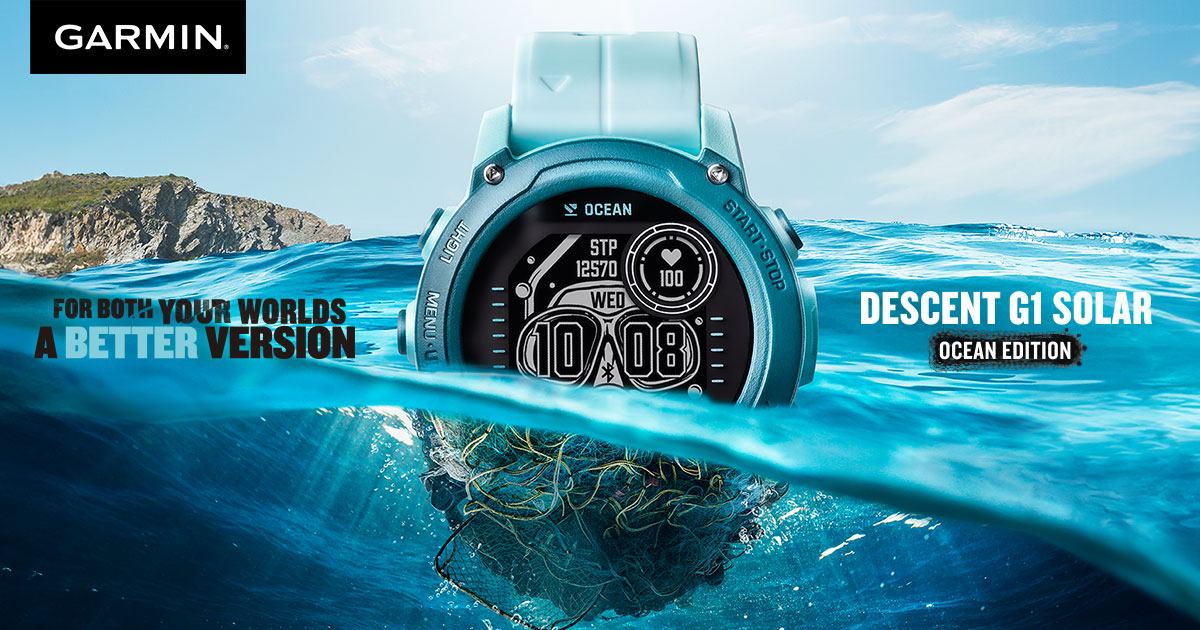
Smart watches add fitness tracking, navigation and notifications, and some include serious dive functions. They suit divers who want one connected device across daily life and diving. Battery management is the deciding factor. A watch that needs frequent charging may be inconvenient on a multi-day liveaboard or remote trip, especially when you already have lights, cameras and computers competing for charging space.
For scuba diving, consider whether a smart watch is being selected as your primary computer, a secondary display or simply a daily watch with occasional underwater capability. Those are different jobs, and the ideal model changes accordingly.
Fit matters more than case diameter alone
A large watch can look purposeful on land yet become awkward under a wetsuit cuff or drysuit seal. Case thickness, lug-to-lug length and strap flexibility often matter more than diameter. A 42 mm case with short lugs can wear smaller and more securely than a 40 mm case with a long, rigid bracelet.
Try to account for your actual diving configuration. A watch worn on bare skin in Singapore's warm water will need a different strap length from one used over thick neoprene or a drysuit. A rubber or silicone strap is comfortable, saltwater-friendly and easy to rinse. A NATO-style fabric strap offers security because the watch remains attached if one spring bar fails, but it stays wet longer. A metal bracelet is durable and versatile for everyday wear, although it can be heavier and requires an effective extension system for exposure protection.
For technical divers, consider where the watch sits in relation to your computer, compass, torch hand and hose routing. A watch should not create clutter or interfere with operating other equipment. The cleanest setup is usually the safest and easiest to use.
Build quality, servicing and ownership
A dive watch is a pressure-rated instrument with wearable components. Gaskets age, crowns can be damaged and salt crystals can affect moving parts if the watch is not rinsed after use. Always rinse it in fresh water, particularly around the bezel and crown, then allow it to dry before storing it.
Screw-down crowns improve security, but only when used properly. Never operate the crown or pushers underwater unless the manufacturer specifically permits it. Before a trip, inspect the crystal, strap, buckle and spring bars. A worn strap is a small problem until it fails in the water.
Service intervals vary by brand and movement type. The sensible approach is to follow the manufacturer's schedule and arrange a pressure test if the watch has taken a notable knock, the crystal shows condensation, or the case has been opened for battery work. A modestly priced watch that is serviced properly is a better dive companion than an expensive model with neglected seals.
Choosing for common diving scenarios
For holiday and recreational diving, a 200 m-rated quartz or solar watch with a unidirectional bezel, bright dial and comfortable rubber strap is usually the most straightforward option. It is easy to use, low maintenance and unlikely to distract from your primary computer.
For regular local diving, look for a watch you are willing to wear often. Familiarity matters. You should know how the bezel feels, how the lume performs and whether the strap works with the exposure protection you actually use.
For technical or expedition-oriented setups, favour uncompromised readability, a secure extended strap and a case that is not unnecessarily bulky. A mechanical watch can absolutely work here, but the decision should be based on personal preference rather than an assumption that mechanical means tougher. Your computer, depth gauge, timer and written plan should remain aligned with the level of redundancy required for the dive.
A dive watch should make your kit more practical, not more complicated. Choose the one that you can read instantly, secure confidently and maintain properly, then let it become a familiar part of every pre-dive check.